
M&E Drawing Services
M&E Drawing Services – Precision That Powers Your Project
At Deans Design Services, we specialise in delivering high-quality M&E Drawings that serve as the backbone of efficient building design and construction. To begin with, our expertly crafted schematics provide clear, detailed representations of mechanical systems—such as HVAC, plumbing, and fire protection—as well as electrical layouts, including lighting, power distribution, and data cabling.
Whether you’re embarking on a new build, refurbishment, or fit-out, our M&E Drawings ensure seamless coordination between disciplines. As a result, they help you avoid costly clashes, minimise delays, and maintain project momentum. Moreover, we work closely with architects, engineers, and contractors to produce compliant, easy-to-read documentation that supports every stage of your project—from concept through to completion.
Thanks to our advanced CAD and BIM capabilities, we bring clarity, accuracy, and foresight to your technical drawings. Consequently, you’re empowered to make smarter decisions and achieve smoother installations. Ultimately, you can trust Deans Design Services to deliver M&E Drawings that keep your project running on time, on budget, and on spec.
What are M&E Drawings?
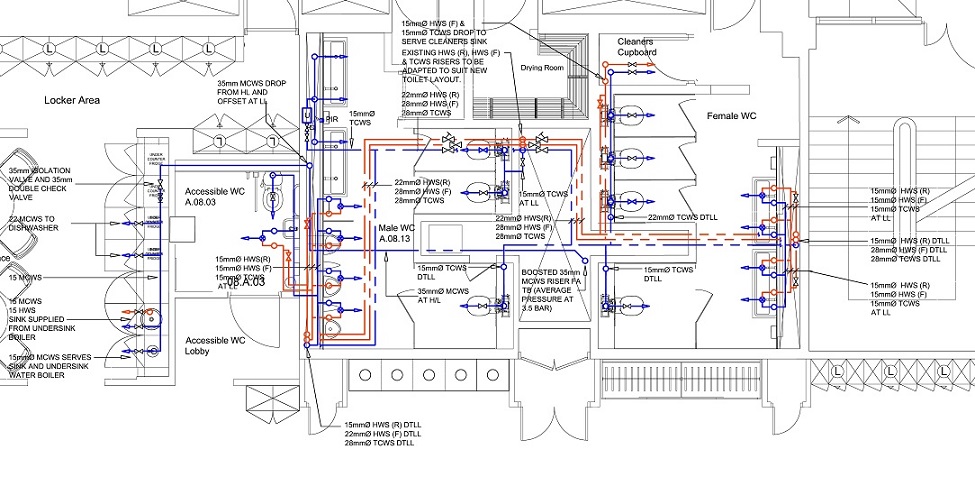
M&E drawings—short for Mechanical and Electrical drawings—are essential technical documents that play a crucial role in the design, construction, and ongoing maintenance of buildings and infrastructure. To begin with, these detailed schematics illustrate the layout, specifications, and coordination of both mechanical systems—such as heating, ventilation, and air conditioning (HVAC)—as well as electrical systems, including lighting, power distribution, and fire alarms. By doing so, they provide a comprehensive visual guide that supports accurate planning and execution.
What Information Do We Require?
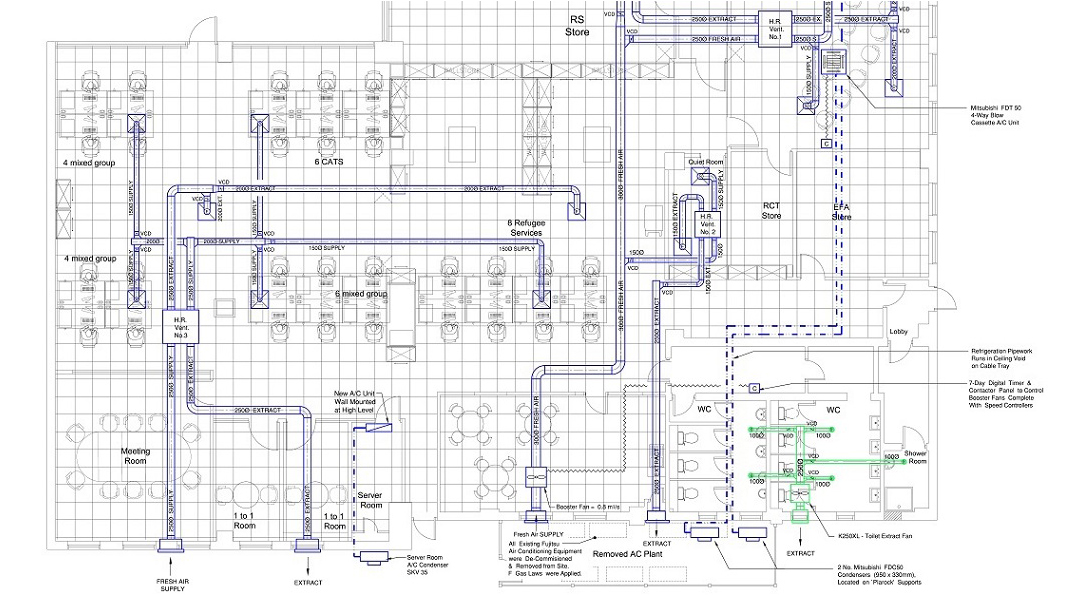
To update existing drawings, we can begin by working from supplied marked-up paper drawings or scanned images and PDFs. These sources provide a useful starting point for capturing revisions and design intent. However, in many cases, updating drawings also requires access to reference materials—such as architectural layouts, structural plans, or service schematics—which must be current and accurate to ensure consistency across all documentation. By incorporating these additional resources, we can produce updated M&E drawings that align seamlessly with the overall project framework and meet the required standards for coordination and compliance.
What M&E Drawings Include
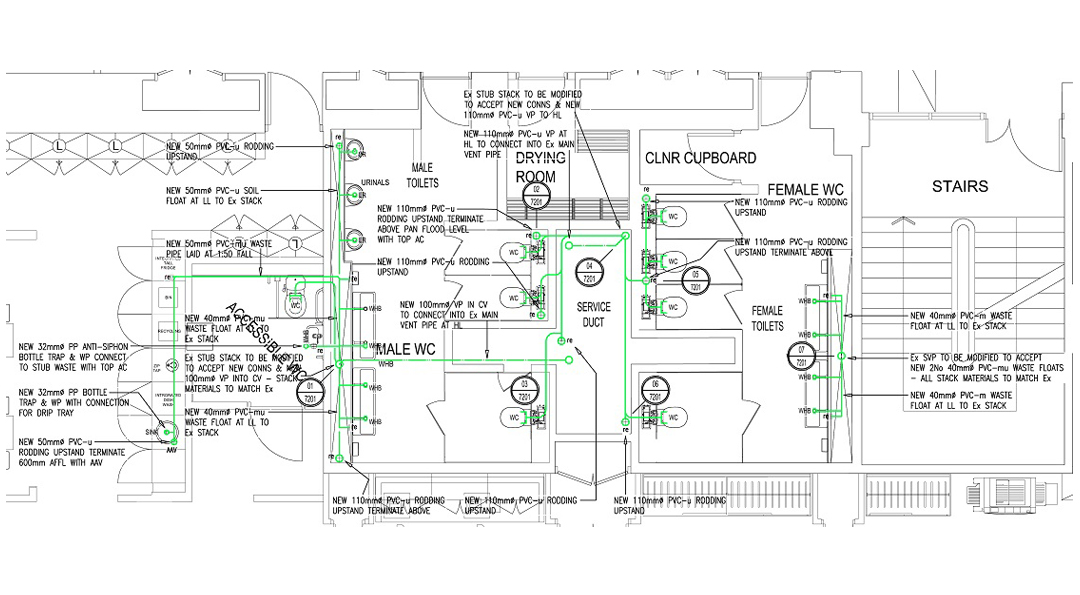
Our M&E Drawings cover a comprehensive range of building services, divided into two key categories: mechanical and electrical systems.
Mechanical systems include essential components such as heating, ventilation, and air conditioning (HVAC), which regulate indoor climate and air quality. In addition, we incorporate plumbing systems, underfloor heating solutions, solar panel installations, and public health systems to ensure comfort, sustainability, and compliance with health standards.
Electrical systems, on the other hand, encompass internal and external lighting layouts, power distribution networks, and fire alarm systems designed for safety and efficiency. Furthermore, we detail data networks, access control mechanisms, and integrated security systems to support modern building functionality and occupant protection.
By clearly documenting both mechanical and electrical elements, our M&E Drawings provide a reliable foundation for coordinated design, smooth installation, and long-term maintenance.
Why M&E Drawings Matter
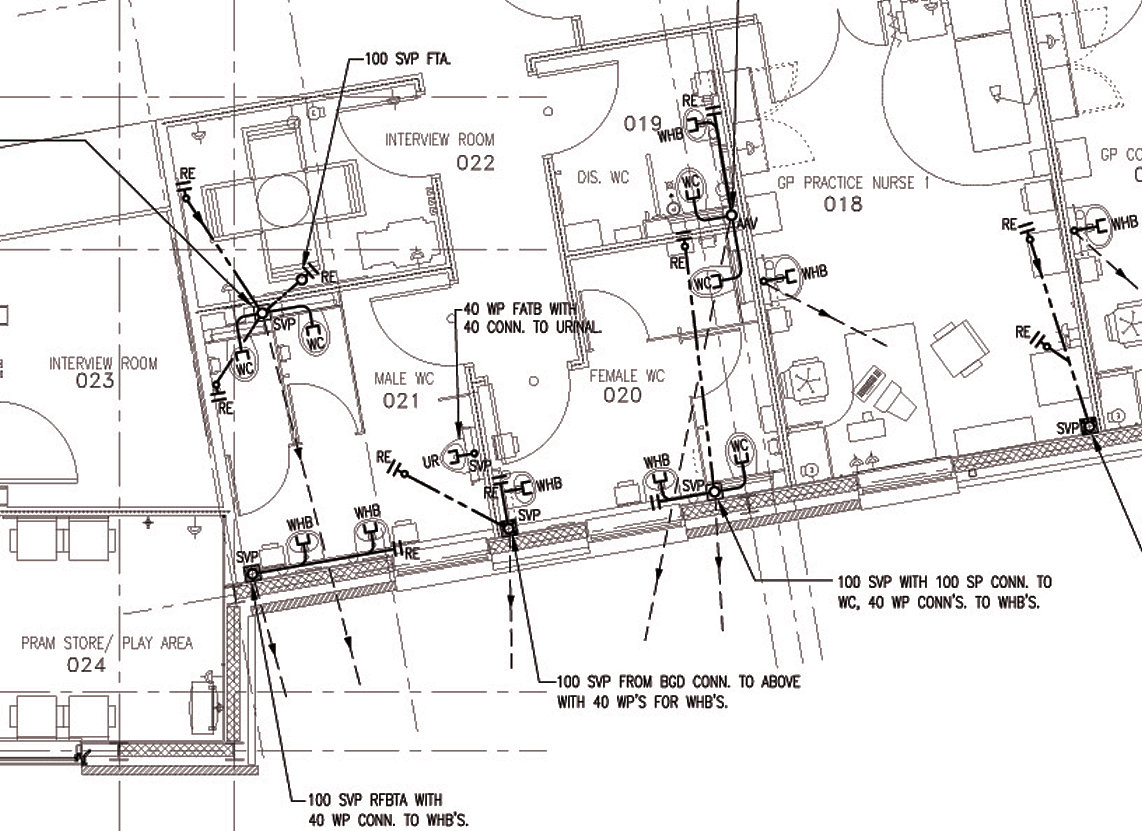
Accurate M&E drawings are absolutely critical for the success of any construction project. First and foremost, they help prevent costly clashes between systems, which can otherwise lead to delays and expensive rework. In addition, they significantly reduce the likelihood of installation errors by providing precise, easy-to-follow guidance for contractors and engineers. Furthermore, these drawings ensure full compliance with building regulations, which is essential for both safety and legal approval.
By clearly mapping out the location of ducts, pipes, wiring, and equipment, M&E drawings contribute to better planning and smoother on-site execution. As a result, teams can work more efficiently and with greater confidence. Equally important, these drawings play a vital role in long-term facility management. Over time, they allow maintenance teams to understand the building’s infrastructure without the need for invasive inspections or guesswork, thereby saving time and resources.
Coordination and Collaboration
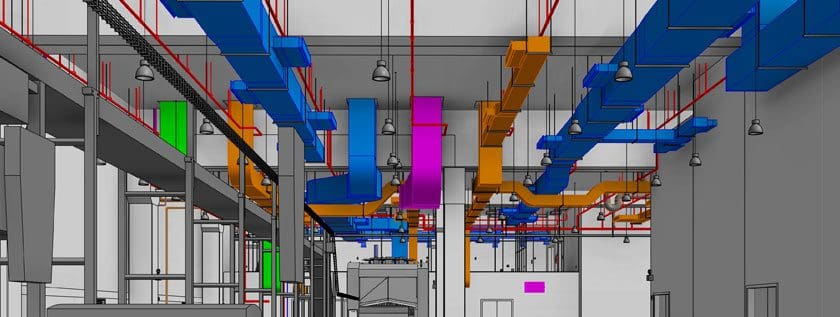
One of the key benefits of M&E drawings lies in their crucial role in multidisciplinary coordination. When integrated with architectural and structural plans, they help identify potential conflicts early in the design phase. As a result, teams can address issues proactively rather than reactively, saving both time and resources. This level of collaboration, especially in complex projects such as hospitals, data centers, and commercial buildings, significantly minimizes delays and reduces the need for costly rework.
Moreover, the use of modern CAD and BIM tools allows M&E drawings to be produced with exceptional precision. In turn, this ensures that all systems are accurately represented and aligned with the overall design intent. Additionally, these tools enable dynamic updates as the project evolves, keeping documentation current and relevant throughout the construction lifecycle. Ultimately, M&E drawings serve as a vital communication tool that enhances coordination, improves efficiency, and supports successful project delivery.
Types of M&E Drawings
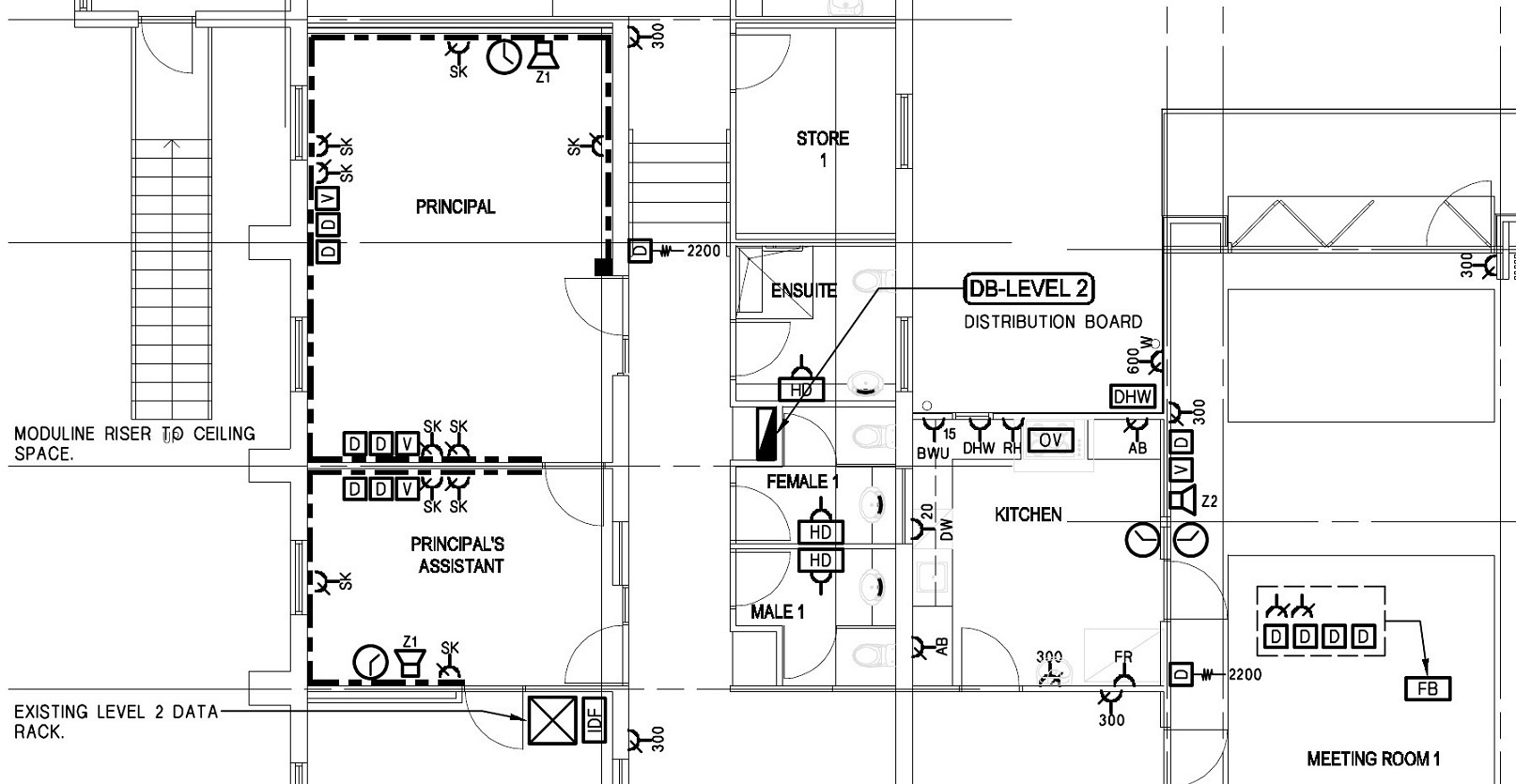
M&E documentation typically includes several key types of drawings, each serving a distinct purpose in the project lifecycle. To begin with, design drawings illustrate conceptual layouts and system planning, providing the initial framework for development. Next, coordination drawings help resolve spatial conflicts between systems, ensuring that mechanical and electrical components integrate smoothly with architectural and structural elements. Following that, installation drawings guide on-site implementation, offering precise instructions for contractors and engineers during construction. Finally, record (as-built) drawings capture the final installed conditions for future reference, which is essential for maintenance, upgrades, and long-term facility management.
What Industry standards do we comply with?
To ensure our M&E Drawings meet the highest industry standards, we align with guidance from CIBSE, BSI and the UK Building Resulations, while leveraging advanced tools like NBS for precision and compliance.
